Frontend vs Backend: The Ultimate Comparison Guide
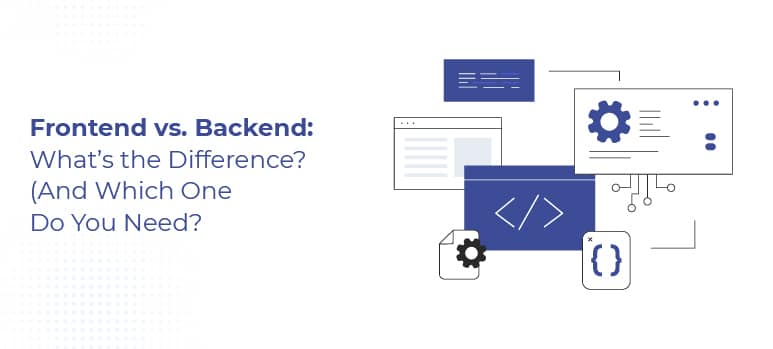
Make the right decision between Frontend vs Backend Development. This guide addresses the differences between these tools that you will see in the future. The 2026 employment market forecast supports the information in this guide and includes expert opinions as to how.
What is Front-end Development?
Front-end development creates the design of the web and applications that visitors view and use directly in the web browser. They build the Web and Applications You See in Your Browser or on Your Mobile Device. Focuses primarily on designing responsive and aesthetically pleasing frontends that use HTML to layout the page structure. CSS creates visual effects, and JavaScript to create interactive experiences with users.
Front-end developers must also ensure that websites function in multiple browsers and mobile devices. And that they provide a positive user experience (e.g., smooth transitions between pages, etc.). In addition, popular development frameworks like React (39.5% popularity), Angular (17.1%), and Vue provide additional speed and flexibility to front-end developers.
What Is Back-End Development?
Back-end development refers to the processes that create the “engine”. The server-side for handling data, logic, and security (data) behind the scenes. This includes the process of letting the user request information and managing databases like MySQL or MongoDB through the use of APIs to provide (serve) information.
Languages commonly used in back-end development, including but not limited to, Python, Java, Node.js, PHP, and Ruby on Rails, help to develop scalable systems for thousands of users, plus protect from security threats against databases such as SQL injections.
Frontend vs Backend: Core Difference
Although both serve critical, complementary roles within the overall stack of Web Development, it is estimated that the global market for Web Development will be worth between $76-80 Billion in 2026, with a Compound Annual Growth Rate (CAGR) of 8%-9%.
“Frontend combines design and user wonder; it is even about beauty, but it really is also about usability,” observes an industry insights expert. The backend is significantly more load-intensive in regard to the infrastructure, according to the research from Oxford.
Technologies and Tools: Comparison
Frontend Stack
- The core three languages of frontend stacks are HTML, CSS, and JavaScript—these languages are used by every website.
- Node.js is the top framework at 40.8%—React is increasing in popularity in its adoption—they are both an extension of JavaScript.
- Tools of frontend stacks include tools like Webpack and Sass for optimization.
Backend Stack
- The languages of backend stacks are Java and Node.js—Java for enterprise applications and Node.js for real-time applications.
- The databases/APIs for backend stacks are PostgreSQL and REST/GraphQL.
- Tools of backend stacks are Docker and AWS—these tools are utilized for deployment.
Full-stack combines both, which is beneficial for small teams, however, a specialization makes one excel deeper in particular technologies.
Salaries, Demand, and Career Paths
Web development market projected to grow to $165 billion in 2035. Frontend stacks are seen as “an easier roadmap” to enter due to their visual feedback. However, both the frontend and backend require expertise, as the backend focuses on logic and the frontend on user experience.
- Frontend stacks are better suited for creative projects
- Backend stacks are ideal for applications that are data-driven.
Which to Choose for Your Project?
After determining whether your project will primarily focus on the frontend or the backend, you can determine if hiring a full-stack developer is appropriate. Determine your project’s needs. If you project to experience high traffic, prioritize building out the backend first to support scalability.
In Conclusion
The frontend is responsible for creating user experiences via visual and interaction design; whereas the backend provides the necessary logic and data functionality that supports the frontend.
Together they provide the driving force for A $76 Billion Plus Web Development Market. To develop pixel-perfect HTML, use semantic code+responsiveness framework+auditing tools (e.g., Lighthouse), if you have a complex UI then work with agencies to audit/validate your pixel-perfect HTML designs using the most appropriate tools for your project’s specifications/deadlines.
About the Author